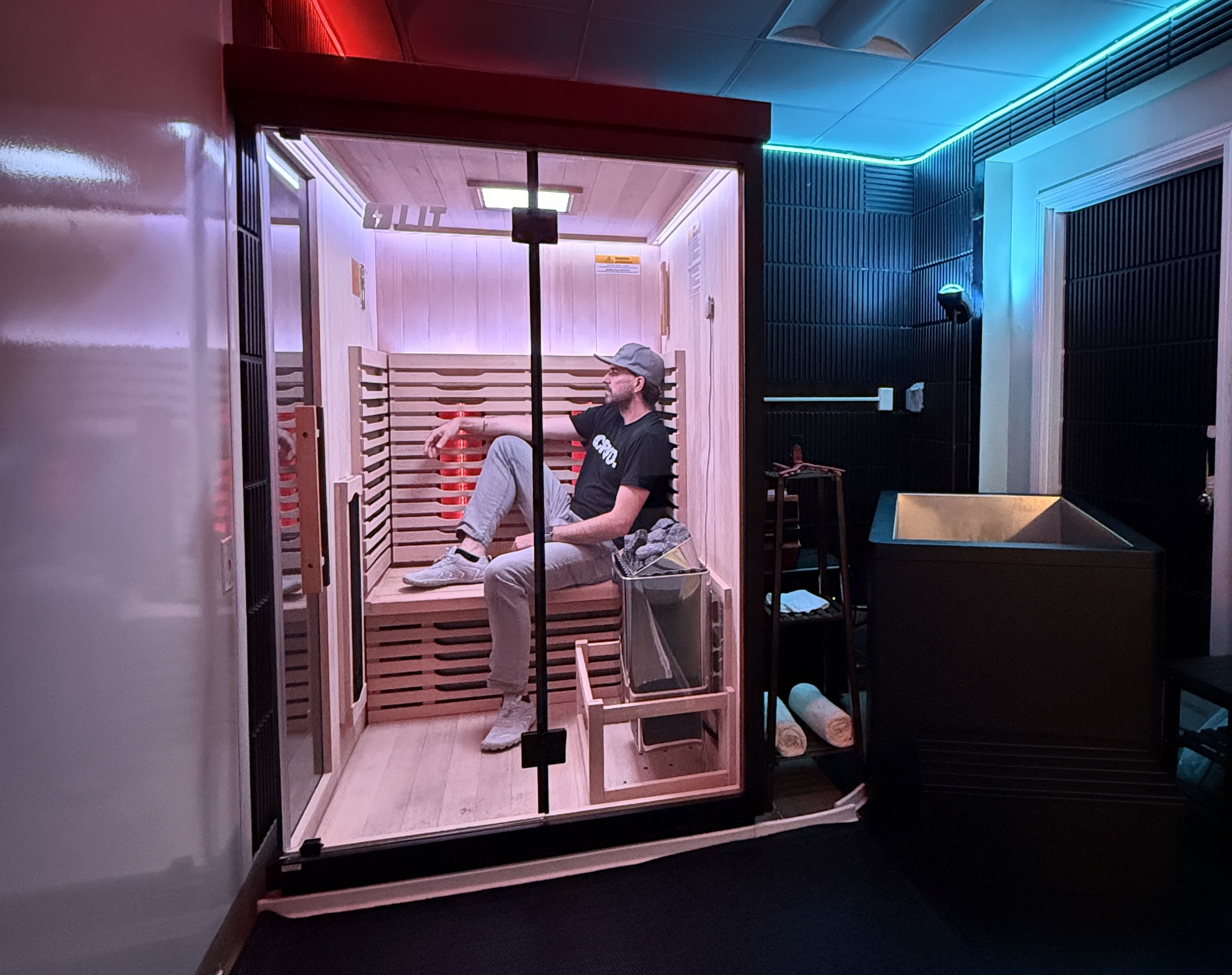
Contrast Therapy
Mark - Float Boston
What does Contrast Therapy Do?
For as long as Float Boston has been here, they’ve had Float Tanks, and only Float Tanks. When I took over I did a survey and asked everyone if I were to add something, what would you all want. Then I asked again back in March. Both times it was a resounding, WE WANT CONTRAST! So I gave you all exactly what you wanted.
Below I have 2 versions of the same blog. The short version for those of you in a rush, or who can’t be bothered to read everything. Then the longer version below that goes deep into what contrast therapy is, and how it helps
Why Contrast Therapy?
Floating works by taking things away — gravity, light, sound, input — until your nervous system has nothing left to defend against. Contrast therapy does the opposite. You alternate between the infrared sauna and the cold plunge, two or three cycles, ending on cold. The heat opens your blood vessels and loosens muscle; the cold clamps them down and sends out a sharp wake-up signal. Cycling between them pumps fresh blood through tired tissue and flushes out what's been sitting there. The simplest way to hold the difference: floating removes stress, contrast therapy trains you to handle it. Float when you're wound up, can't sleep, or running on fumes. Do contrast when you're sore, stiff, sluggish, or flat.
About the cold — yes, it's cold, and your first plunge your body will gasp and want out immediately. That happens to everyone and it's involuntary. Ten or fifteen seconds is a completely legitimate first plunge. Nobody's timing you. What changes over the next few visits isn't toughness, it's breathing: by your third or fourth session you'll take one slow breath instead of five fast ones, and most people settle into the one-to-three minute range within a month. That's where the real payoff lives — the flood of warmth and clarity afterward, and the fact that staying calm when your body says bail is a skill that follows you out the door. And if you want the best version of both, book contrast therapy first and a float immediately after. Your muscles are already warm and open, and the tank catches your nervous system right as it's ready to come down. It's the deepest float most people ever have.
Here's the longer version
That's the short answer. If you want to know what's actually happening in your body — and why the order of these two matters more than people realize — keep going.
What floating is really doing
A float tank holds about a thousand pounds of Epsom salt dissolved in water heated to skin temperature. You get in and float without effort. Two things happen at once.
Your body stops working. Gravity is a load your muscles have been carrying since the moment you got out of bed. In the tank it disappears. The spine decompresses. The postural muscles in your neck, low back, and hips — the ones that never fully switch off, not even while you sleep — finally let go. This is why people with chronic pain and old injuries often feel real relief in a single session.
Your brain stops processing. No light, no sound, and no temperature difference between your skin and the water, so after a few minutes you lose track of where your body ends. Your nervous system spends all day filtering input. Remove nearly all of it and the system shifts out of fight-or-flight and into the state where your body does its repair work.
Better sleep, less pain, a quieter head, less of that maxed-out feeling. Those are the four things people report most.
What's happening in the sauna and the plunge
In the heat, your blood vessels dilate. Blood moves toward your skin, your heart rate climbs to roughly a brisk walk, and muscle and connective tissue soften. In the cold, everything reverses hard — vessels constrict, blood pulls to your core, and your body releases a surge of norepinephrine, which is what's behind the alertness and mood lift you feel afterward.
Cycling between the two creates a pumping action through your circulatory system. Dilate, constrict, dilate, constrict. Athletes have used some version of this for decades because it moves metabolic waste out of tired muscle and brings fresh blood in.
But the circulation isn't the most interesting part. Cold immersion is a controlled stressor. You're putting your body into a situation it wants to escape, and then staying calm inside it. That's a rep. Do enough reps and your nervous system gets measurably better at moving through a stress response and back out the other side — which is a very different thing from avoiding stress altogether.
Where they overlap
These have more in common than the experience suggests. Both are nervous system tools rather than spa treatments. Both are drug-free and take under an hour. Both help with pain and stiffness, by different mechanisms. Both reliably improve sleep — that's the single most consistent thing people report from either one. And both reward consistency: you'll feel something the first time, and considerably more by the fourth.
Where they're genuinely different
Float when you're dealing with:
- Anxiety, overwhelm, feeling maxed out
- Insomnia, or a mind that won't shut off at night
- Chronic pain, back and neck issues, joint load
- Burnout and mental fatigue
Do contrast when you're dealing with:
- Muscle soreness, stiffness, post-training recovery
- Sluggishness and low energy
- Low mood — the lift after a plunge is sharp and hard to miss
- Circulation and general inflammation
The felt difference is just as clear. After a float you're soft and unhurried; most people don't want to talk much and drive home a little more carefully than usual. After contrast you're clear-headed and charged, buzzing for twenty minutes and then settling into something steady.
More on the cold
The gasp on your first plunge is the cold shock response. It's involuntary, it happens to essentially everyone, and it isn't a sign you're doing it wrong. Get in, count to fifteen, get out. That's a real session.
What improves over the next few visits is breath control, not grit. By your third or fourth plunge the gasp is shorter and you can pull one slow breath instead of five fast ones. Thirty seconds stops being dramatic. Then a minute. Most people land somewhere between one and three minutes within a month.
Three reasons that build-up is worth the effort:
The benefit lives in the calm, not the shock. Fifteen seconds of panic is mostly just fifteen seconds of panic. Once you can stay in long enough to get your breathing back, you've moved from surviving the cold to working with it — and that's where the physiological effects come from.
The afterglow scales. The wave of warmth and clarity that hits a few minutes after you get out is the actual payoff, and it's noticeably stronger after a real immersion than a quick dip.
It transfers. This is the one nobody anticipates. Staying calm while every instinct screams at you to bail is a trainable skill, and it doesn't stay in the plunge. It shows up in traffic, in hard conversations, in the minute before you walk into something you've been dreading.
One practical note: if you're pregnant, have a cardiovascular condition, uncontrolled blood pressure, or any heart-related diagnosis, talk to your doctor before cold immersion. We're glad to walk you through the protocol either way.
Why the order matters
Contrast first, float second. That isn't a scheduling convenience — it's the whole point.
By the time you finish your last plunge, your circulation has been pumping for forty-five minutes and your muscles are warm and pliable. Your body is primed, and it's also stimulated — elevated, alert, a little revved. Left alone that settles on its own over an hour or two. But walk straight from the plunge into a float tank and you're giving your nervous system the softest possible place to come down at the exact moment it's ready to. The drop from stimulated into total sensory quiet goes deeper than either session produces alone.
There's a physical payoff too: warm, loose muscle releases much further in the tank than cold, guarded muscle does. People who've floated dozens of times regularly tell us their first contrast-then-float was the deepest float they'd had.
Reversed, it mostly cancels out. You spend an hour bringing your nervous system all the way down, then a cold plunge yanks it back up. Not harmful — just a waste of a good float.
Practical details
Plan on about two and a half hours door to door. Book contrast first with a float immediately after, and leave roughly ten minutes between the two to rinse off and rehydrate. Eat something light beforehand — not right before, but don't arrive on an empty stomach. And clear your evening if you can. You won't want to do much afterward, which is rather the point.
This combination is worth reaching for coming off your hardest week, after a race or a heavy training block, following long travel, or heading into something big you want to arrive at with a clear head.
Where to start
If you've never done either, start with whichever one your body is asking for. Wound up and can't sleep? Float. Sore, stiff, and flat? Contrast. And when you're ready to feel what they do together, book them back to back and give yourself the afternoon.
Questions before you book? Call 617-875-0725 or email info@floatboston.com.