Steph Curry doesn't float to recover. He floats to see the game before it happens.
Every parent is looking for the edge — the better season, the better transcript, the better shot at the right school. The tool some of the best athletes on the planet use for their minds is one your kid can use too. It's an hour of nothing at all.
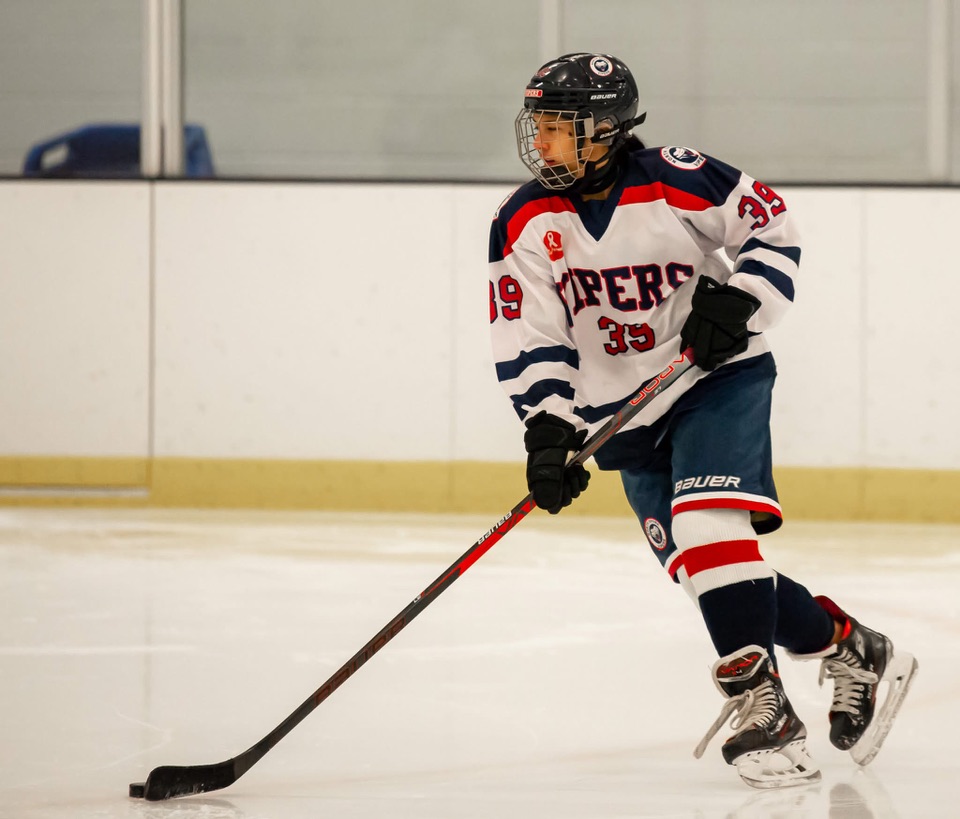
You've paid for the private coaching. The travel team. The SAT tutor. You've driven to 6 a.m. practices and sat through tournaments in the rain.
I run a float center in Somerville, and I want to make a case for one more thing. It's not a supplement and it's not another practice. It's the part of training almost nobody schedules: quiet, on purpose, with a job to do inside it.
What the pros are actually doing in there
When Steph Curry started floating in 2015, most people assumed it was a recovery thing. Sore muscles, Epsom salt, done.
That's not how he talks about it.
"It's just me and my thoughts for an hour, playing Russian roulette of the mind."Steph Curry · to ESPN, on the float tank
In another interview he described coming out with a clear head that carries into the following days — a boost of focus and perspective that gets stronger the more he does it. That's mental training, not a bath.
Look at what he did at the 2024 Paris Olympics. Four games into a shooting slump, before the semifinal against Serbia, Curry closed his eyes.
"I was visualizing myself on the podium."Steph Curry · to FOX Sports, before scoring 36 with nine threes
He then dragged Team USA back from 17 down. Visualization isn't a side habit for him. It's a weapon.
He's not alone. Carl Lewis reportedly used in-tank visualization to prepare for his gold-medal long jump at the 1988 Seoul Olympics. Tom Brady had a float tank installed in his home. The Patriots kept players floating through the Super Bowl LI run — Julian Edelman, a skeptic at first, said once you settle in "it feels like you're just on a cloud." Aly Raisman, Michael Phelps, Novak Djokovic, and entire MLB and NFL organizations have adopted it. Pro cyclist Evelyn Stevens floated regularly while training for the hour record and said the tank made her more present on hard rides instead of just wanting the pain to be over.
Hockey is catching up too. NHL teams are now building float rooms into their practice facilities — Utah's new facility opened in 2025 with a sensory deprivation room next to the hydrotherapy pool.
The pattern is the same across all of them: the tank is where they rehearse.
Why it works: the research on athletes
I try to be careful here. Floating isn't magic, and I won't call it a medical treatment. But there is real, peer-reviewed research on athletes specifically, and it points one direction.
Recovery
A 2016 study in Performance Enhancement & Health put 60 international-level athletes across nine sports through a 45-minute float after training. Perceived muscle soreness dropped significantly and mood improved. A 2013 study in the Journal of Strength and Conditioning Research found lower blood lactate and less soreness after floating following a punishing eccentric-exercise session. A 2019 follow-up found floating improved sleep and next-day performance recovery.
Skill and precision
This is the part coaches should pay attention to. Researchers paired floating with mental imagery — exactly what Curry describes — and measured the results.
A 2023 systematic review of the flotation literature concluded the odds of a study finding athletic benefit were meaningfully better than chance, and that floating can reasonably be assumed to help athletes improve and recover.
Why does the tank amplify visualization? Because nothing else is competing for the brain's attention. No screen, no noise, no teammates, no gravity pulling on a sore shoulder. The brain drops into a slower, meditation-like state, and in that state mental rehearsal is vivid. Decades of research on mental practice show that imagining a skill activates much of the same neural circuitry as performing it. Floating just gives that practice an empty room to run in.
The part nobody talks about: the same skill fixes grades
Here's where I want parents and coaches to sit up.
The thing your athlete practices in the tank — quieting the noise, controlling attention, rehearsing performance under pressure — is the exact thing that gets tested at 8 a.m. on SAT day.
A 2018 study in PLOS ONE found a single one-hour float produced a large, significant drop in anxiety, along with improved mood and relaxation. A 2014 study in BMC Complementary and Alternative Medicine found floating reduced stress and improved sleep quality over a seven-week program.
Now think about your sixteen-year-old. Practice until 6, dinner at 7, homework until 11, phone until midnight, up at 6:30. Chronic sleep debt. Cortisol through the roof. Then we ask them to perform on a chemistry exam and a playoff game in the same week.
The kid who can downshift — who can sleep, who can walk into a test without a racing heart — has an advantage no tutor can teach. Test anxiety drags scores down for a huge share of students. Sleep-deprived teens retain less of what they study. A clear mind is not a soft benefit. It shows up in the score report.
And the visualization habit transfers directly. The same athlete who can see the free throw drop can see themselves working calmly through a hard problem set, or walking into an interview at the school they want.
To the parents
You're looking for an edge. Not a gimmick — an edge. Something that compounds.
Floating is one hour, roughly once a week or before a big competition or exam. No equipment, no learning curve, no injury risk. It gives your kid the one thing their schedule never allows: total quiet, with no one asking anything of them. What they do with it — rest, rehearse, or just breathe — is theirs.
If you're spending real money on training and tutoring, this is the cheapest line on the list, and it makes everything else on the list work better.
To the coaches
You already run film sessions. You already tell your athletes to visualize. Most of them can't, because they've never been anywhere quiet enough to do it.
Use floating the way pro organizations do: a pre-competition mental-prep tool for your key players, and a recovery tool during heavy weeks. One float the night before a championship game, with a specific imagery script — three plays, from the athlete's own eyes, at game speed — is more useful than any pregame speech.
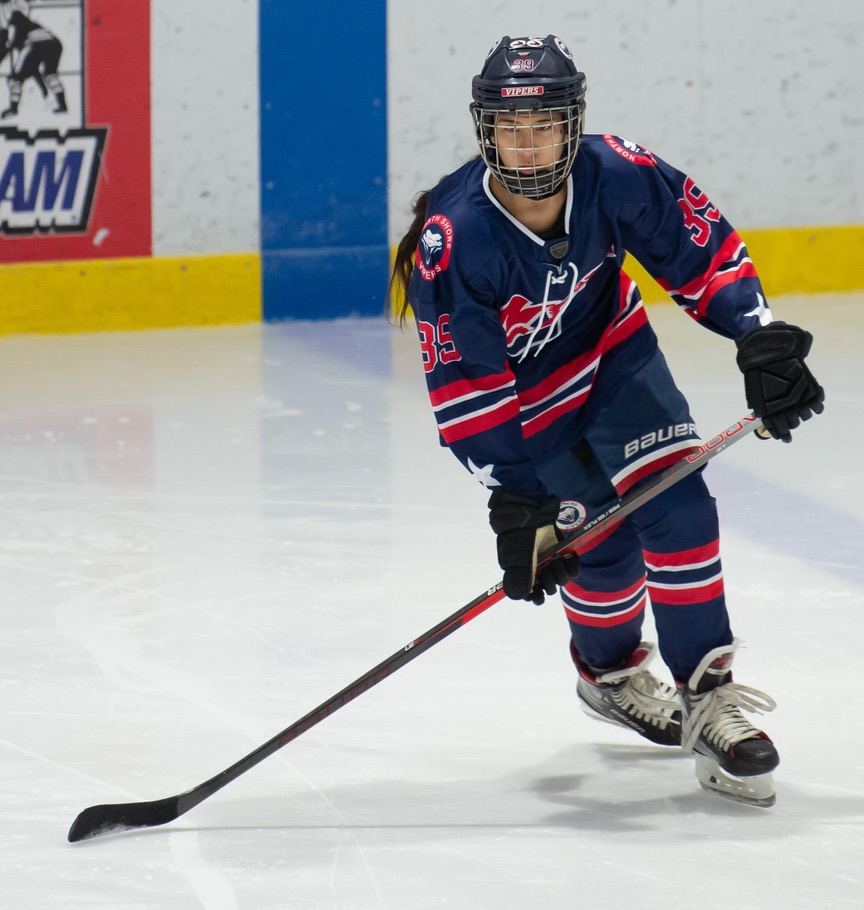
For hockey specifically, the sport is built for this. The game is fast, the shifts are short, and the decisions happen before the puck arrives. A goalie who has already seen fifty shots from the slot in the tank reads the fifty-first faster. A defenseman who has rehearsed the breakout under pressure doesn't panic when the forecheck comes. Give them the tank the night before and a script to run inside it.
How to start
- Book a float before a game or a test, not after. That's how the pros use it. Recovery floats are great too, but start with the mental side.
- Give them a job. Before they go in, have them pick two or three specific moments to rehearse. A serve. A start. The first five minutes of the exam.
- Float with them the first time. Book two rooms. You'll understand what you're paying for, and you'll probably book your own next one.
- Make it a routine, not a one-off. The research and the athletes both say the same thing: the more you do it, the more you get.
Practical details for a season schedule
- 60 minutes in the water, 80 minutes in the room. Plan on roughly an hour and a half door to door.
- Weekday afternoons are the quietest time in the building. Between dismissal and dinner is ideal.
- Eat something light an hour or two ahead, skip caffeine that afternoon, and don't shave right before.
Age policy: Anyone can float. If you're under 18, have a parent sign the waiver on your behalf and let us know in the booking notes that you're a teen. Parents can wait in the lobby, float themselves, or enjoy the local food scene.
Questions about whether floating is right for your athlete? Call or text 617-875-0725 and we'll talk it through honestly.
Studies cited in this post
- Driller & Argus (2016). Flotation REST and napping on mood state and muscle soreness in elite athletes. Performance Enhancement & Health, 5(2).
- Morgan, Salacinski & Stults-Kolehmainen (2013). Acute effects of flotation REST on recovery from maximal eccentric exercise. J Strength Cond Res, 27(12).
- Broderick et al. (2019). Flotation REST improves sleep and performance recovery in athletes. Performance Enhancement & Health, 7(1–2).
- Suedfeld & Bruno (1990). Flotation REST and imagery in the improvement of athletic performance. J Sport & Exercise Psychology, 12(1).
- Wagaman, Barabasz & Barabasz (1991). Flotation REST and imagery in collegiate basketball performance. Perceptual and Motor Skills, 72(1).
- McAleney, Barabasz & Barabasz (1990). Flotation REST and visual imagery: tennis. Perceptual and Motor Skills, 71(3).
- Norlander et al. (1999). Flotation REST, muscle tension, pain and performance in archers. Perceptual and Motor Skills, 88(1).
- Barabasz, Barabasz & Bauman (1993). REST improves human performance: rifle marksmanship. Perceptual and Motor Skills, 76(3).
- Feinstein et al. (2018). Short-term anxiolytic and antidepressant effect of Floatation-REST. PLOS ONE, 13(2).
- Kjellgren & Westman (2014). Sensory isolation in flotation-tank as a preventive health-care intervention. BMC Complementary and Alternative Medicine, 14:417.
- Systematic review of Flotation-REST (2023), medRxiv preprint.
- Athlete quotes: ESPN (via Outside Online); FOX Sports (2024); NBC Sports Boston (2017).
Your kid is already doing the hard part.
This is the part where they get to be still — and get better while they do it. Float Boston is on Medford Street in Somerville, about fifteen minutes from most of the surrounding school districts.
Coaching a team or running a club? We build personalized packages for teams, clubs and organizations. Reach out to mark@floatboston.com for details.
Floating is a wellness practice, not a medical treatment. If your teen has a medical or mental-health condition, talk with their doctor before floating.