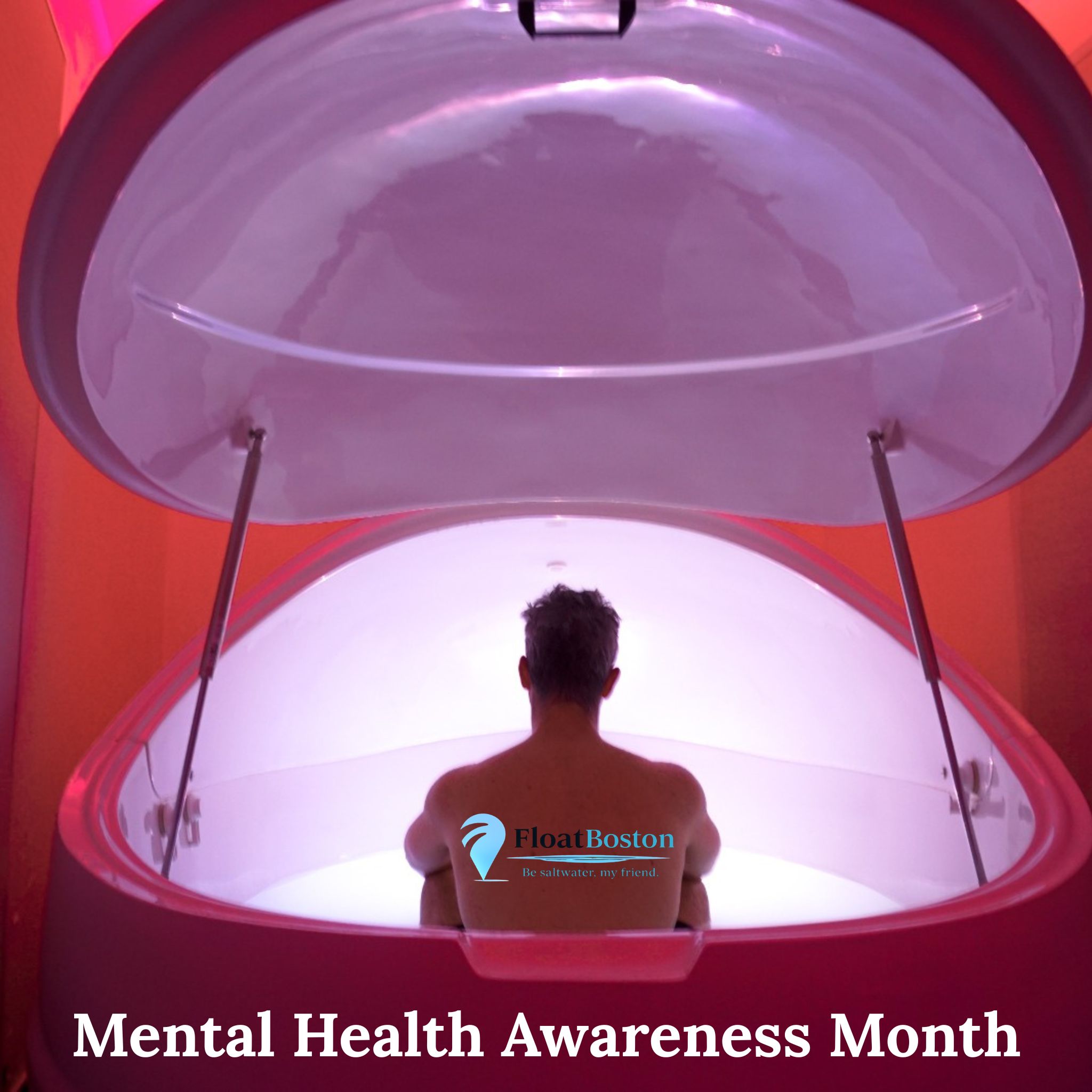
Mental Health Awareness Month
Mark - Float Boston
How do you feel?
May is Mental Health Awareness Month, and I ask you. How do you feel?
If you’ve come to Float recently, you’ve probably seen me smiling. Cheerful. Happy. Energetic. That’s the face I put on for the world to see; but like most of you I don’t always feel like I am on top of the world. There are some moments, days or even months where that face is hard to put on. Where I don’t want to get up in the morning, where I don’t want to do what needs to be done. There are times where I think I’ve failed at life, and want to go hibernate like a bear.
But I don’t.
I eventually get up, dust myself off and get back to whatever needs to be done.
That’s easier said than done for a lot of you out there. Mental health issues are real. Depression is real. Anxiety is real, and not everyone has the ability to turn it off.
I could cite medical studies on what works and what doesn’t. I could have AI write this up and give anyone reading all of the information they need to pick themselves up, but in the end, it’s just information and at least from my personal experiences, information doesn’t help. So instead I want to give real world examples of what’s helped me overcome my feelings of despair, sadness, depression, etc and maybe if I’m lucky, it will help one of you out. This may get a little long, if so I apologize to those who love quick reads.
Freud would have had a field day with how I grew up. Single parent household, section 8 housing, homeschooled, and if it was allowed even my undergarments would have been bought at Goodwill. Even though I was homeschooled I still found a way to be bulled. My grandfather had committed suicide when I was 3, my grandmother passed when I was 14, my mom at 17 and my fathers side of the family decided that since I was poor that they didn’t want anything to do with me.
If you thought my childhood was unkind to me, by the time I was 30 I was not doing any better but add alcoholism to my buckets anddd I had 2 divorces under my belt to boot. #winning
I started to learn how to cope in my 30’s. First with long hikes deep into the wilderness, no phone. No internet. No distractions, floating with extra steps if you will. I started reading a lot of those cheesy self help books, and I came into writing and started to tell fantastic stories on paper (I just published my first book!). If I couldn’t get into the mountains, I’d take long walks through the city, sometimes trekking 12 miles or more and almost never taking my phone, music, or any technology.
Do you see the pattern so far?
Most of what I did involved shutting off not just from the internet, but from the world. I found that even when my mental health was at it’s lowest, those long silent walks & hikes almost always cleared the fog in my head and life would return to some sense of normalcy.
But that’s getting harder and harder as technology advances. We are programmed to think that we have to stay connected or we’ll miss some important notification that could change everything. And we don’t just have our phones now, but watches, rings, even smart glasses! Everything around us is telling us to LOOK! And those constant dopamine surges, then crashes are partly to blame for these feelings of dread that so many of us have.
For a lot of us, doomscrolling has become the default thing to do when we’re board, depressed, or having “one of those days”. If it’s not that, it’s Netflix, video games, or some other dopamine spiking activity. But when was the last time one of those activities did anything helpful? Even if you can’t get outside, try turning some music on. Read a book. Do some writing. Try art.
I dare you to turn all technology off for just an hour a day. Just an hour. See how you feel.
Then if you’re really up for a challenge, try a no notification day. Pick a day you have off and try turning everything off for 6 or even 8 hours. I guarantee it will help and I bet you’d do it again.
I’m not saying smart phones, technology, and the internet are the root of all depressive issues, because they’re not. But they sure aren’t helping either. I’m also not saying that all of these things I mentioned cured me, because they didn’t. I still get fits of depression. Anxiety. Stress. Anger and despair. But whenever I do get these feelings the second I chose to disconnect I almost immediately feel better.